国际生殖健康/计划生育杂志 ›› 2025, Vol. 44 ›› Issue (6): 468-470.doi: 10.12280/gjszjk.20250304

• 病例报告 • 上一篇    下一篇

一例血友病A合并CYP21A2基因复合杂合变异患儿家系遗传学分析

徐福蓉, 陈元康, 康启超, 唐联锐, 张钏, 马盼盼, 惠玲, 周秉博()   

  1. 730050 兰州,甘肃省妇幼保健院(甘肃省中心医院)医学遗传中心,甘肃省出生缺陷与罕见病临床研究中心(徐福蓉,康启超,唐联锐,张钏,马盼盼,惠玲,周秉博),胎儿医学中心(陈元康)
  • 收稿日期:2025-06-11 出版日期:2025-11-15 发布日期:2025-11-18
  • 通讯作者: 周秉博,E-mail:15293110286@163.com
  • 基金资助:
    甘肃省科技计划项目(21JR7RA680)

Genetic Analysis of A Family with A Child Having Haemophilia A and Compound Heterozygous Variants of CYP21A2 Gene

XU Fu-rong, CHEN Yuan-kang, KANG Qi-chao, TANG Lian-rui, ZHANG Chuan, MA Pan-pan, HUI Ling, ZHOU Bing-bo()   

  1. Medical Genetics Center, Gansu Provincial Clinical Research Center for Birth Defects and Rare Diseases (XU Fu-rong, KANG Qi-chao, TANG Lian-rui, ZHANG Chuan, MA Pan-pan, HUI Ling, ZHOU Bing-bo), Fetal Medicine Center (CHEN Yuan-kang), Gansu Provincial Maternity and Child Health Hospital (Gansu Province Central Hospital), Lanzhou 730050, China
  • Received:2025-06-11 Published:2025-11-15 Online:2025-11-18
  • Contact: ZHOU Bing-bo, E-mail: 15293110286@163.com

摘要:

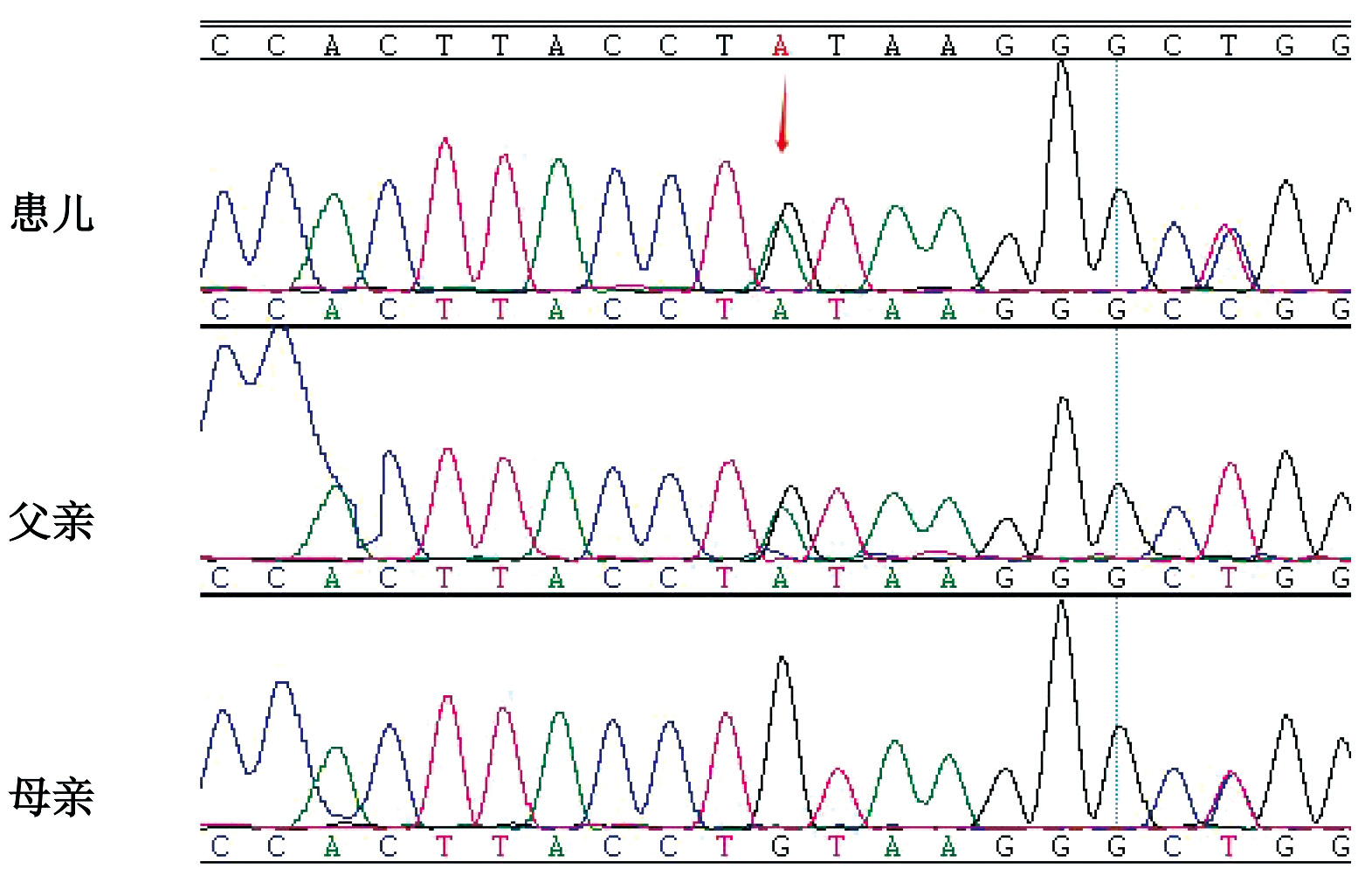
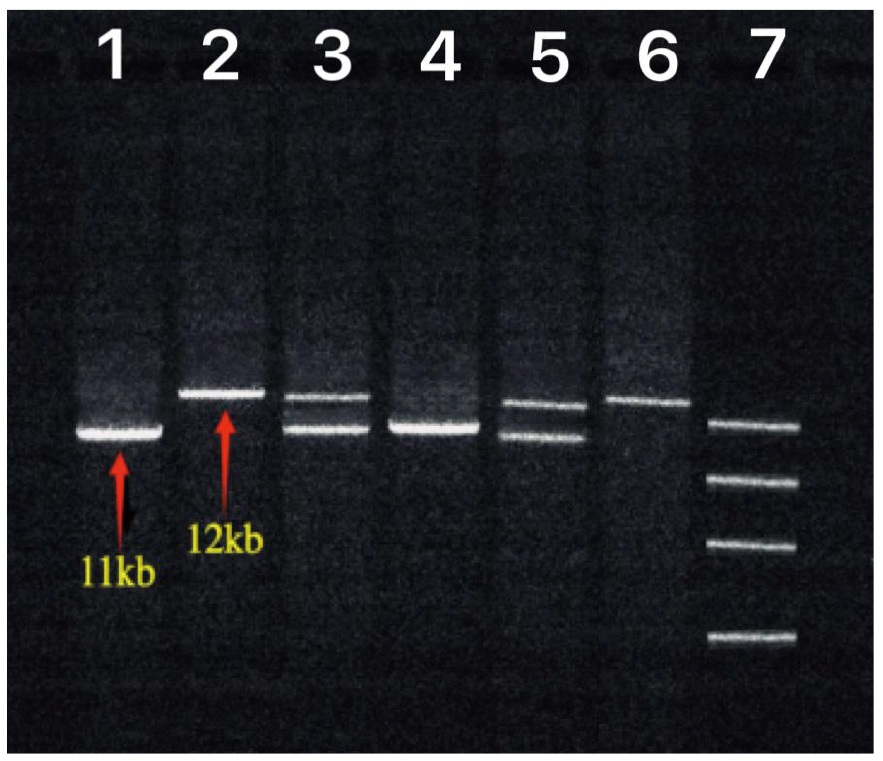
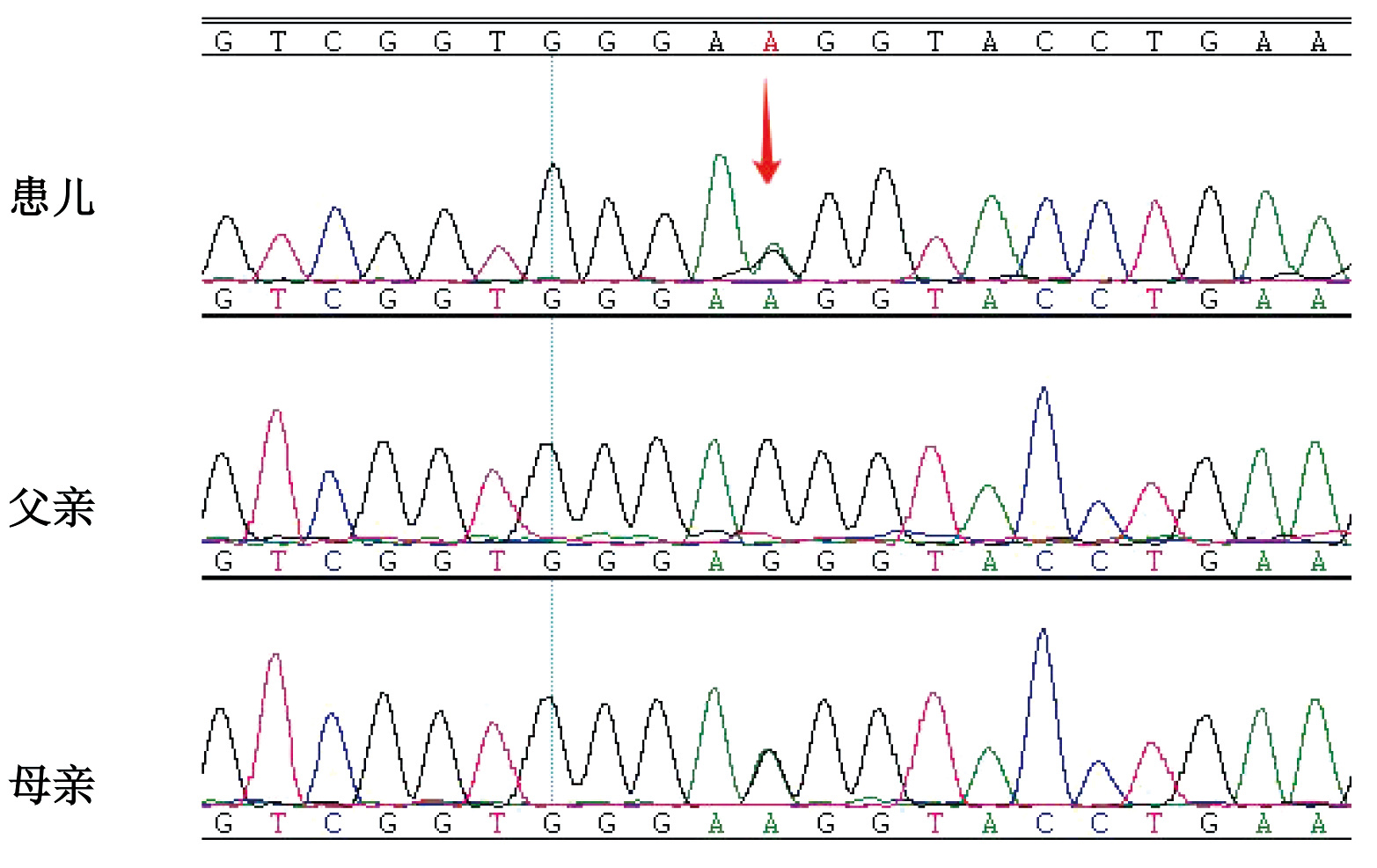
报告1例血友病A合并CYP21A2基因复合杂合变异患儿。患儿入院常规检测结果提示凝血功能异常,行全外显子组测序(whole exome sequencing,WES)分析发现患儿存在CYP21A2基因c.292+1G>A和c.-113G>A复合杂合变异,经Sanger测序验证,c.-113G>A位点变异来源于母亲,该位点评级为可能致病性变异;c.292+1G>A位点变异来源于父亲,该位点评级为致病性变异。因WES未检测到与患儿目前临床表型高度相关变异,结合患儿临床表型高度可疑血友病,因此同时采用长片段聚合酶链反应(long-range polymerase chain reaction,LR-PCR)检测,结果提示患儿F8基因内含子22倒位,患儿母亲为携带者,父亲正常。患儿入院后通过对症治疗及外源性FⅧ因子补充后好转出院。随访患儿目前定期补充外源性FⅧ因子,病情稳定,无其他异常。通过WES联合LR-PCR检测明确了患儿的基因诊断,为家系成员的遗传咨询及未来产前诊断及患儿的后期管理提供了依据。

关键词: 血友病A, 肾上腺增生, 先天性, 全外显子组测序, 聚合酶链反应, F8基因, CYP21A2基因

Abstract:

We report a case of a child with haemophilia A complicated by compound heterozygous variants in the CYP21A2 gene. Routine tests upon the child′s admission indicated the abnormal coagulation function. Whole exome sequencing (WES) analysis revealed that the child had the compound heterozygous variants c.292 + 1G>A and c.-113G>A in the CYP21A2 gene. Verified by Sanger sequencing, the c.-113G>A site variant was inherited from the mother, and this site was rated as a likely pathogenic variant. The c.292 + 1G>A site variant was inherited from the father, and this site was rated as a pathogenic variant. Since WES did not detect the variants highly correlated with the child′s current clinical phenotype, and the clinical phenotype highly suggested haemophilia, long-range polymerase chain reaction (LR-PCR) was simultaneously carried out. The results of LR-PCR indicated an inversion of intron 22 in F8 gene. The child′s mother was a carrier, while the father had a normal genetic profile. After admission, the child received symptomatic treatment and supplementation with exogenous factor Ⅷ, and then was discharged in an improved condition. During the follow-up, the child has been regularly receiving exogenous supplementation of factor Ⅷ, and the condition remains stable with no other abnormalities. The genetic diagnosis of the child was clarified through the combined use of WES and LR-PCR, which provided us a basis for genetic counseling of family members, future prenatal diagnosis and the subsequent management.

Key words: Hemophilia A, Adrenal hyperplasia, congenital, Whole exome sequencing, Polymerase chain reaction, F8 gene, CYP21A2 gene