国际生殖健康/计划生育杂志 ›› 2026, Vol. 45 ›› Issue (3): 209-213.doi: 10.12280/gjszjk.20250562

• 病例报告 • 上一篇    下一篇

完全型雄激素不敏感综合征合并双侧卵巢两性母细胞瘤一例

谢晓冰, 侯涛()   

  1. 524023 广东省湛江市, 广东医科大学第一临床医学院(谢晓冰,侯涛)梅州市人民医院妇科(侯涛)
  • 收稿日期:2025-11-10 出版日期:2026-05-15 发布日期:2026-06-02
  • 通讯作者: 侯涛,E-mail:GDhoutao@126.com

Complete Androgen Insensitivity Syndrome Complicated with Bilateral Ovarian Gynandroblastoma: A Case Report

XIE Xiao-bing, HOU Tao()   

  1. The First School of Clinical Medicine, Guangdong Medical University, Zhanjiang 524023, Guangdong Province, China (XIE Xiao-bing, HOU Tao); Department of Gynecology, Meizhou People's Hospital, Meizhou 514031, Guangdong Province, China (HOU Tao)
  • Received:2025-11-10 Published:2026-05-15 Online:2026-06-02
  • Contact: HOU Tao, E-mail: GDhoutao@126.com

摘要:

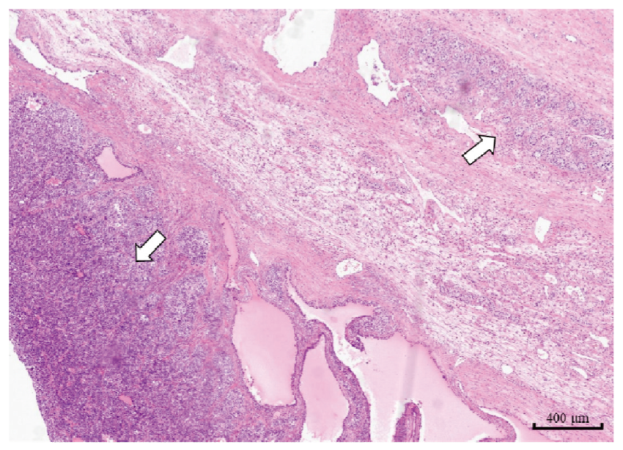
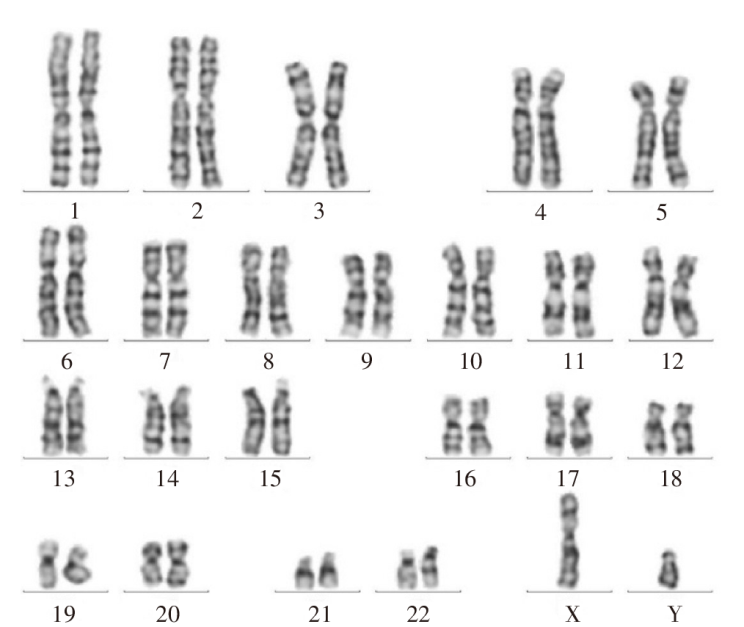
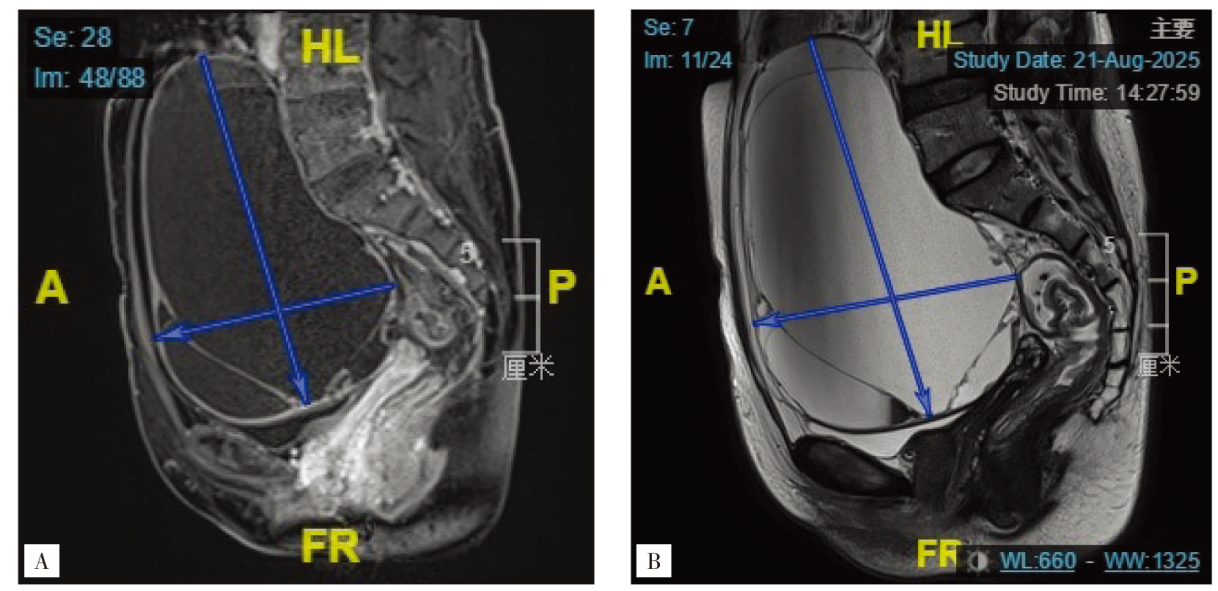
完全型雄激素不敏感综合征(complete androgen insensitivity syndrome,CAIS)是一种X连锁隐性遗传病,由雄激素受体基因突变导致,临床较为罕见,且合并两性母细胞瘤的相关病例更为鲜有。报告1例染色体核型为46,XY,社会性别为女性,且合并双侧卵巢两性母细胞瘤的病例。患者为53岁原发性闭经女性,因下腹隐痛就诊,查体女性第二性征及外阴发育正常,术前雌二醇与抑制素B水平升高,影像学检查提示盆腔巨大包块(直径约16 cm)、子宫显示不清。术中见左侧卵巢肿瘤,右侧附件外观正常,右侧附件连接一肌性组织,大小约4 cm×2 cm,考虑始基子宫。遂行左侧附件切除术,术中冰冻病理提示交界性或低度恶性肿瘤,进一步行全面分期手术,术后病理最终诊断两性母细胞瘤。术后外周血染色体核型分析示46,XY。此类患者需做到早期诊断与干预,从根本上预防其性腺肿瘤的发生。

关键词: 雄激素迟钝综合征, 性腺发育不全, 46, XY, 肿瘤, 性腺组织, 卵巢肿瘤, 闭经

Abstract:

Complete androgen insensitivity syndrome (CAIS) is an X-linked recessive genetic disease, which is caused by the mutations of androgen receptor gene. CAIS is relatively rare, and the cases complicated with gynandroblastoma are more rarer. We report a case that the karyotype is 46, XY, female gender and bilateral ovarian gynandroblastoma. The patient was a female aged 53 years, with primary amenorrhea. She was hospitalized due to dull pain in the lower abdomen. The female's secondary sexual characteristics and vulva development were normal. The levels of estradiol and inhibin B were increased before surgery. Imaging examination revealed a huge pelvic mass (about 16 cm in diameter) and unclear uterus. During the operation, the left ovarian tumor was seen, the appearance of the right adnexa was normal. The right adnexa was connected to a muscular tissue, the size of about 4 cm×2 cm, considered primordial uterus. The left adnexectomy was performed. The intraoperative frozen pathology showed a borderline or low-grade malignant tumor, and further comprehensive staged surgery was performed. The final diagnosis of postoperative pathology was gynandroblastoma. The karyotype analysis of peripheral blood was 46,XY. Such patients need early diagnosis and intervention, to fundamentally prevent the occurrence of gonadal tumors.

Key words: Androgen-insensitivity syndrome, Gonadal dysgenesis, 46,XY, Neoplasms, gonadal tissue, Ovarian neoplasms, Amenorrhea