国际生殖健康/计划生育杂志 ›› 2026, Vol. 45 ›› Issue (4): 282-284.doi: 10.12280/gjszjk.20260027

• 病例报告 • 上一篇    下一篇

染色体插入易位误判为平衡易位一例

易嘉馨, 张娜, 陈育华, 叶蔚, 陈何莲, 谢缌颖, 王明蕊()   

  1. 524000 广东省湛江市广东医科大学附属医院妇产医学中心(易嘉馨,张娜,叶蔚,谢缌颖,王明蕊)检验医学中心(陈育华, 陈何莲)
  • 收稿日期:2026-01-21 出版日期:2026-07-15 发布日期:2026-07-27
  • 通讯作者: 王明蕊 E-mail:8034452@qq.com

A Case of Misdiagnosed Chromosomal Insertion Translocation as A Balanced Translocation

YI Jia-xin, ZHANG Na, CHEN Yu-hua, YE Wei, CHEN He-lian, XIE Si-ying, WANG Ming-rui()   

  1. Obstetrics and Gynecology Medicine Center (YI Jia-xin, ZHANG Na, YE Wei, XIE Si-ying, WANG Ming-rui), Laboratory Medicine Center (CHEN Yu-hua, CHEN He-lian), Affiliated Hospital of Guangdong Medical University, Zhanjiang 524000, Guangdong Province, China
  • Received:2026-01-21 Published:2026-07-15 Online:2026-07-27
  • Contact: WANG Ming-rui E-mail:8034452@qq.com

摘要:

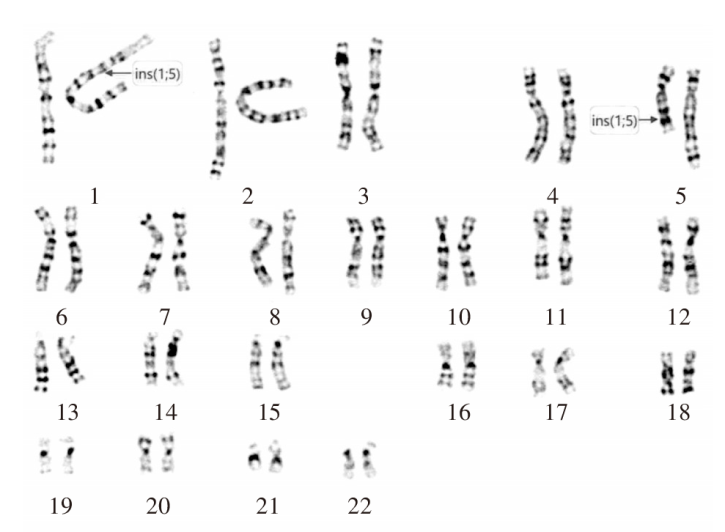
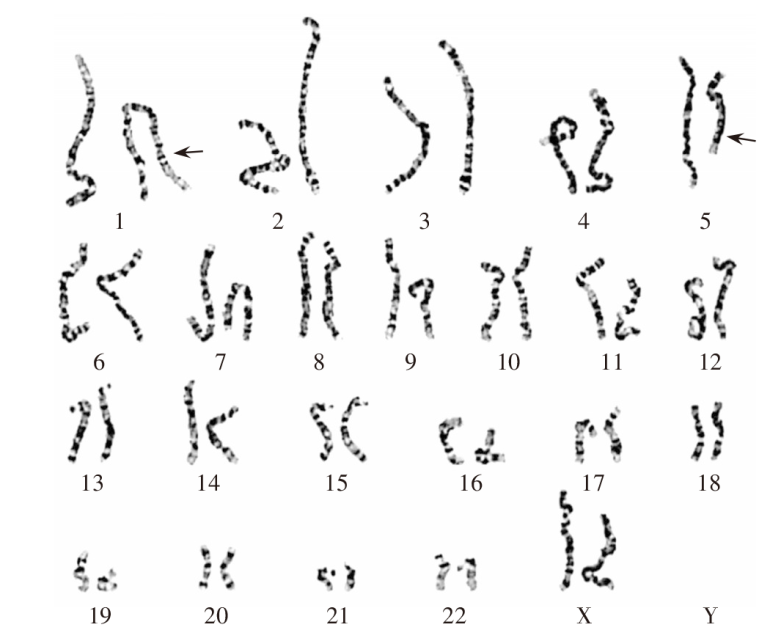
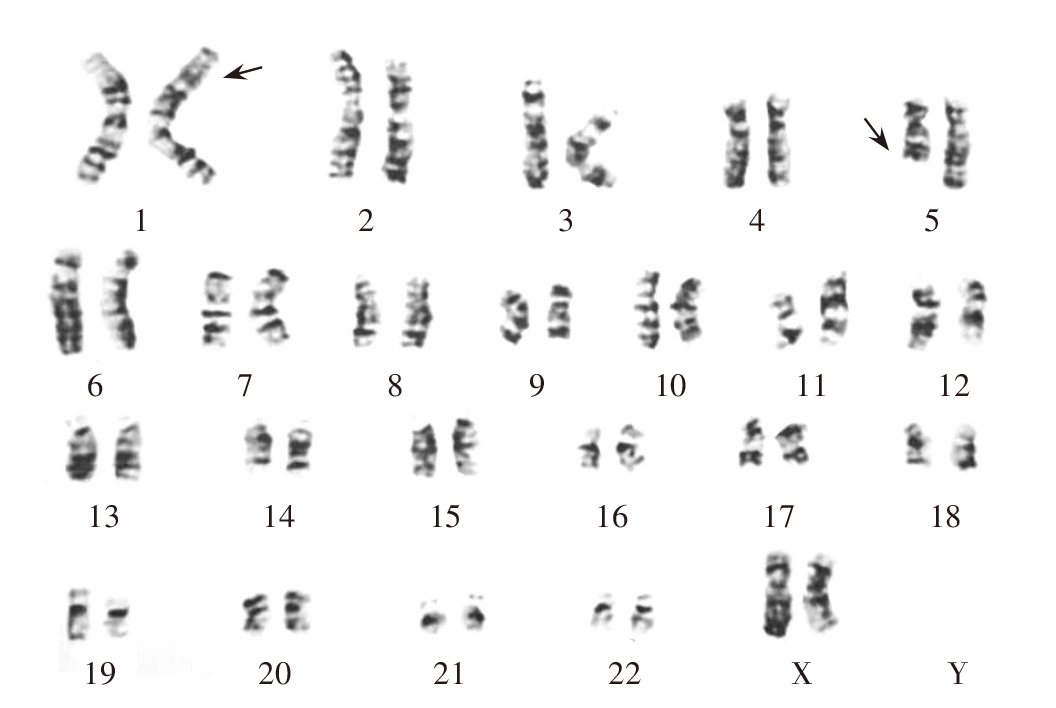
报告1例广东医科大学附属医院(我院)产前诊断结果与孕妇既往染色体核型分析结果从理论上配型不符合的病例。孕妇既往外院外周血染色体核型分析结果为46,XX,t(1;5)(p36;q22),其配偶为46,XY,inv(Y)(p11q11),而我院羊水染色体核型分析结果为46,XN,ins(1;5)(p33;q34q21)。根据相互易位携带者的配子分离理论,若既往诊断为易位,则理论上难以解释目前胎儿核型,考虑孕妇既往染色体核型分析结果有偏差。为进一步验证,送上级医院行高分辨率G显带复核,确认孕妇外周血核型为46,XX,ins(1;5)(p32.2;q33.2q22),与我院羊水核型结果相符。该病例提示对于复杂或非典型的染色体结构异常,尤其涉及到复杂重排时,常规G显带分辨率有限,需结合理论知识,必要时进一步行高分辨率显带精确定位断裂点及重排类型,避免基于错误诊断影响遗传咨询。

关键词: 产前诊断, 染色体畸变, 核型分析, 易位,遗传, 诱变,插入

Abstract:

We report a case of theoretically inconsistent results between the prenatal diagnosis and previous chromosomal karyotype analysis at Affiliated Hospital of Guangdong Medical University (our hospital). The previous previous karyotype analysis of peripheral blood from an outside hospital suggested 46,XX,t(1;5)(p36;q22) in the pregnant woman, and 46,XY,inv(Y)(p11q11) in her spouse. However, the amniotic fluid karyotype at our hospital was 46,XN,ins(1;5)(p33;q34q21). According to the theory of gamete segregation of reciprocal translocation carriers, if the previous diagnosis is translocation, it is theoretically difficult to explain the current fetal karyotype, considering that the results of previous chromosomal karyotype analysis in the pregnant woman could be biased. For further verification, the pregnant woman was suggested to higher-level hospital for high-resolution G-banding review, and the peripheral blood karyotype of the pregnant women was confirmed to be 46,XX,ins(1;5)(p32.2;q33.2q22), which was consistent with the results of amniotic fluid karyotype from our hospital. This case suggests that the conventional G-banding has limited resolution for complex or atypical chromosomal structural abnormalities, especially when complex rearrangements are involved. It is necessary to further conduct high-resolution banding to accurately locate break points and rearrangement types, in combination with theoretical knowledge, so as to avoid affecting genetic counseling based on wrong diagnosis.

Key words: Prenatal diagnosis, Chromosome aberrations, Karyotyping, Translocation, genetic, Mutagenesis, insertional