
Journal of International Reproductive Health/Family Planning ›› 2026, Vol. 45 ›› Issue (5): 368-372.doi: 10.12280/gjszjk.20260383
• Original Article • Previous Articles Next Articles
LI Xin-xin, HUANG Yu-shan, GAN Tian, MENG Yue( )
)
Received:2026-07-17
Published:2026-09-15
Online:2026-09-20
Contact:
MENG Yue, E-mail: LI Xin-xin, HUANG Yu-shan, GAN Tian, MENG Yue. Construction of A Nomogram Model for Predicting Pregnancy Outcomes in Fresh Embryo Transfer Cycles Using GnRH Antagonist Protocols[J]. Journal of International Reproductive Health/Family Planning, 2026, 45(5): 368-372.
Add to citation manager EndNote|Ris|BibTeX
| 指标 | 训练集 (n=1 683) | 验证集 (n=722) | t或Z或χ2 | P |
|---|---|---|---|---|
| 女方年龄(岁) | 33.19±5.09 | 33.41±5.36 | 0.925 | 0.355 |
| 男方年龄(岁) | 35.10±5.85 | 35.38±6.09 | 1.060 | 0.289 |
| BMI(kg/m2) | 21.83±3.02 | 21.99±2.99 | 1.187 | 0.235 |
| 不孕时间(年) | 3.00(2.00,5.00) | 3.00(2.00,5.00) | -1.149 | 0.251 |
| 基础FSH(U/L) | 7.33±2.72 | 7.30±2.44 | -0.250 | 0.802 |
| 基础LH(U/L) | 4.79±2.68 | 4.70±2.45 | -0.790 | 0.429 |
| 基础E2(pg/mL) | 40.46±20.28 | 41.02±21.32 | 0.609 | 0.543 |
| AMH(ng/mL) | 2.42(1.25,4.27) | 2.38(1.25,4.13) | -0.501 | 0.617 |
| AFC(枚) | 11.39±5.69 | 11.22±5.65 | -0.655 | 0.512 |
| Gn用量(IU) | 1 947.82±581.29 | 1 984.33±595.31 | 1.402 | 0.161 |
| Gn时间(d) | 8.80±1.32 | 8.84±1.37 | 0.594 | 0.553 |
| 扳机日E2(pg/mL) | 1 975.49±951.39 | 1 958.84±931.94 | -0.396 | 0.692 |
| 扳机日LH(IU/L) | 3.29±2.71 | 3.28±2.50 | -0.149 | 0.882 |
| 扳机日孕酮(ng/mL) | 0.58±0.30 | 0.59±0.30 | 0.788 | 0.431 |
| 扳机日子宫内膜厚度(mm) | 10.77±1.87 | 10.70±1.91 | -0.789 | 0.430 |
| 获卵数(枚) | 8.00(5.00,12.00) | 9.00(5.00,12.00) | -0.244 | 0.807 |
| 正常受精数(枚) | 5.00(3.00,8.00) | 5.00(3.00,8.00) | -1.014 | 0.311 |
| D3优质胚胎数(枚) | 2.00(1.00,4.00) | 2.00(1.00,4.00) | -1.310 | 0.190 |
| 受精方式 | 0.017 | 0.895 | ||
| IVF | 1 327(78.85) | 571(79.09) | ||
| ICSI | 356(21.15) | 151(20.91) | ||
| 移植胚胎阶段 | 0.557 | 0.455 | ||
| D3 | 1 327(78.85) | 579(80.19) | ||
| D5 | 356(21.15) | 143(19.81) | ||
| 移植胚胎数(枚) | 0.036 | 0.849 | ||
| 1 | 669(39.75) | 290(40.17) | ||
| 2 | 1 014(60.25) | 432(59.83) | ||
| 临床妊娠率 | 763(45.34) | 321(44.46) | 0.157 | 0.692 |
| 指标 | 训练集 (n=1 683) | 验证集 (n=722) | t或Z或χ2 | P |
|---|---|---|---|---|
| 女方年龄(岁) | 33.19±5.09 | 33.41±5.36 | 0.925 | 0.355 |
| 男方年龄(岁) | 35.10±5.85 | 35.38±6.09 | 1.060 | 0.289 |
| BMI(kg/m2) | 21.83±3.02 | 21.99±2.99 | 1.187 | 0.235 |
| 不孕时间(年) | 3.00(2.00,5.00) | 3.00(2.00,5.00) | -1.149 | 0.251 |
| 基础FSH(U/L) | 7.33±2.72 | 7.30±2.44 | -0.250 | 0.802 |
| 基础LH(U/L) | 4.79±2.68 | 4.70±2.45 | -0.790 | 0.429 |
| 基础E2(pg/mL) | 40.46±20.28 | 41.02±21.32 | 0.609 | 0.543 |
| AMH(ng/mL) | 2.42(1.25,4.27) | 2.38(1.25,4.13) | -0.501 | 0.617 |
| AFC(枚) | 11.39±5.69 | 11.22±5.65 | -0.655 | 0.512 |
| Gn用量(IU) | 1 947.82±581.29 | 1 984.33±595.31 | 1.402 | 0.161 |
| Gn时间(d) | 8.80±1.32 | 8.84±1.37 | 0.594 | 0.553 |
| 扳机日E2(pg/mL) | 1 975.49±951.39 | 1 958.84±931.94 | -0.396 | 0.692 |
| 扳机日LH(IU/L) | 3.29±2.71 | 3.28±2.50 | -0.149 | 0.882 |
| 扳机日孕酮(ng/mL) | 0.58±0.30 | 0.59±0.30 | 0.788 | 0.431 |
| 扳机日子宫内膜厚度(mm) | 10.77±1.87 | 10.70±1.91 | -0.789 | 0.430 |
| 获卵数(枚) | 8.00(5.00,12.00) | 9.00(5.00,12.00) | -0.244 | 0.807 |
| 正常受精数(枚) | 5.00(3.00,8.00) | 5.00(3.00,8.00) | -1.014 | 0.311 |
| D3优质胚胎数(枚) | 2.00(1.00,4.00) | 2.00(1.00,4.00) | -1.310 | 0.190 |
| 受精方式 | 0.017 | 0.895 | ||
| IVF | 1 327(78.85) | 571(79.09) | ||
| ICSI | 356(21.15) | 151(20.91) | ||
| 移植胚胎阶段 | 0.557 | 0.455 | ||
| D3 | 1 327(78.85) | 579(80.19) | ||
| D5 | 356(21.15) | 143(19.81) | ||
| 移植胚胎数(枚) | 0.036 | 0.849 | ||
| 1 | 669(39.75) | 290(40.17) | ||
| 2 | 1 014(60.25) | 432(59.83) | ||
| 临床妊娠率 | 763(45.34) | 321(44.46) | 0.157 | 0.692 |
| 指标 | B | SE | Wald χ2 | P | OR(95%CI) |
|---|---|---|---|---|---|
| 女方年龄(岁) | 0.043 | 0.020 | 4.565 | 0.033 | 1.04(1.00~1.09) |
| 男方年龄(岁) | 0.013 | 0.016 | 0.720 | 0.396 | 1.01(0.98~1.05) |
| BMI(kg/m2) | -0.011 | 0.024 | 0.232 | 0.630 | 0.99(0.94~1.04) |
| 不孕时间(年) | 0.032 | 0.023 | 1.861 | 0.173 | 1.03(0.99~1.08) |
| 基础FSH(IU/L) | 0.012 | 0.031 | 0.142 | 0.706 | 1.01(0.95~1.07) |
| 基础LH(IU/L) | 0.002 | 0.031 | 0.007 | 0.935 | 1.00(0.94~1.07) |
| 基础E2(pg/mL) | 0.000 | 0.003 | 0.006 | 0.940 | 1.00(0.99~1.01) |
| AMH(ng/mL) | -0.030 | 0.035 | 0.763 | 0.382 | 0.97(0.91~1.04) |
| AFC(枚) | -0.004 | 0.018 | 0.062 | 0.804 | 1.00(0.96~1.03) |
| Gn用量(IU) | 0.000 | 0.000 | 0.114 | 0.735 | 1.00(1.00~1.00) |
| Gn时间(d) | -0.096 | 0.067 | 2.091 | 0.148 | 0.91(0.80~1.04) |
| 扳机日E2(pg/mL) | 0.000 | 0.000 | 0.018 | 0.893 | 1.00(1.00~1.00) |
| 扳机日LH(IU/L) | -0.015 | 0.026 | 0.352 | 0.553 | 0.99(0.94~1.04) |
| 扳机日孕酮(ng/mL) | 0.893 | 0.263 | 11.512 | 0.001 | 2.44(1.46~4.09) |
| 扳机日子宫内膜 厚度(mm) | -0.028 | 0.034 | 0.692 | 0.405 | 0.97(0.91~1.04) |
| 获卵数(枚) | 0.040 | 0.030 | 1.800 | 0.180 | 1.04(0.98~1.11) |
| 正常受精数(枚) | -0.052 | 0.038 | 1.922 | 0.166 | 0.95(0.88~1.02) |
| D3优质胚胎数(枚) | -0.132 | 0.036 | 13.446 | 0.000 | 0.88(0.82~0.94) |
| 受精方式 | |||||
| IVF | 1.00(Reference) | ||||
| ICSI | 0.219 | 0.156 | 1.958 | 0.162 | 1.24(0.92~1.69) |
| 移植胚胎阶段 | |||||
| D3 | 1.00(Reference) | ||||
| D5 | -0.360 | 0.214 | 2.844 | 0.092 | 0.70(0.46~1.06) |
| 移植胚胎数(枚) | |||||
| 1 | 1.00(Reference) | ||||
| 2 | -0.659 | 0.168 | 15.407 | 0.000 | 0.52(0.37~0.72) |
| 指标 | B | SE | Wald χ2 | P | OR(95%CI) |
|---|---|---|---|---|---|
| 女方年龄(岁) | 0.043 | 0.020 | 4.565 | 0.033 | 1.04(1.00~1.09) |
| 男方年龄(岁) | 0.013 | 0.016 | 0.720 | 0.396 | 1.01(0.98~1.05) |
| BMI(kg/m2) | -0.011 | 0.024 | 0.232 | 0.630 | 0.99(0.94~1.04) |
| 不孕时间(年) | 0.032 | 0.023 | 1.861 | 0.173 | 1.03(0.99~1.08) |
| 基础FSH(IU/L) | 0.012 | 0.031 | 0.142 | 0.706 | 1.01(0.95~1.07) |
| 基础LH(IU/L) | 0.002 | 0.031 | 0.007 | 0.935 | 1.00(0.94~1.07) |
| 基础E2(pg/mL) | 0.000 | 0.003 | 0.006 | 0.940 | 1.00(0.99~1.01) |
| AMH(ng/mL) | -0.030 | 0.035 | 0.763 | 0.382 | 0.97(0.91~1.04) |
| AFC(枚) | -0.004 | 0.018 | 0.062 | 0.804 | 1.00(0.96~1.03) |
| Gn用量(IU) | 0.000 | 0.000 | 0.114 | 0.735 | 1.00(1.00~1.00) |
| Gn时间(d) | -0.096 | 0.067 | 2.091 | 0.148 | 0.91(0.80~1.04) |
| 扳机日E2(pg/mL) | 0.000 | 0.000 | 0.018 | 0.893 | 1.00(1.00~1.00) |
| 扳机日LH(IU/L) | -0.015 | 0.026 | 0.352 | 0.553 | 0.99(0.94~1.04) |
| 扳机日孕酮(ng/mL) | 0.893 | 0.263 | 11.512 | 0.001 | 2.44(1.46~4.09) |
| 扳机日子宫内膜 厚度(mm) | -0.028 | 0.034 | 0.692 | 0.405 | 0.97(0.91~1.04) |
| 获卵数(枚) | 0.040 | 0.030 | 1.800 | 0.180 | 1.04(0.98~1.11) |
| 正常受精数(枚) | -0.052 | 0.038 | 1.922 | 0.166 | 0.95(0.88~1.02) |
| D3优质胚胎数(枚) | -0.132 | 0.036 | 13.446 | 0.000 | 0.88(0.82~0.94) |
| 受精方式 | |||||
| IVF | 1.00(Reference) | ||||
| ICSI | 0.219 | 0.156 | 1.958 | 0.162 | 1.24(0.92~1.69) |
| 移植胚胎阶段 | |||||
| D3 | 1.00(Reference) | ||||
| D5 | -0.360 | 0.214 | 2.844 | 0.092 | 0.70(0.46~1.06) |
| 移植胚胎数(枚) | |||||
| 1 | 1.00(Reference) | ||||
| 2 | -0.659 | 0.168 | 15.407 | 0.000 | 0.52(0.37~0.72) |
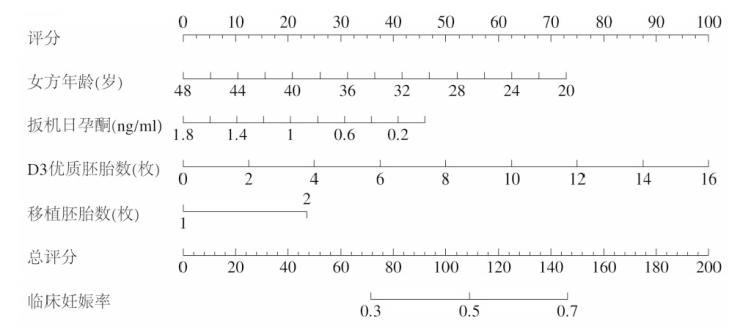
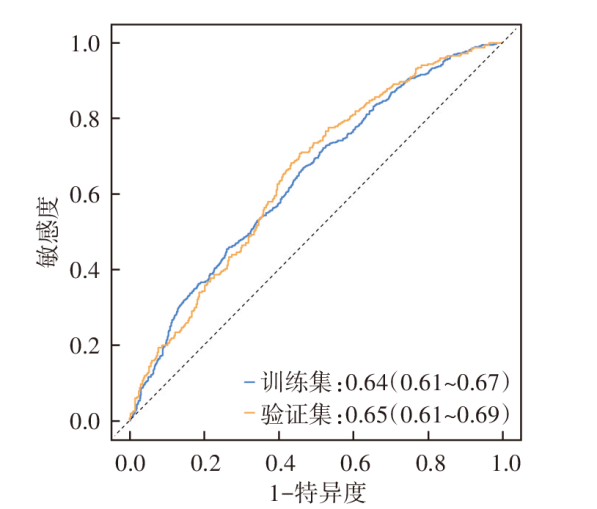
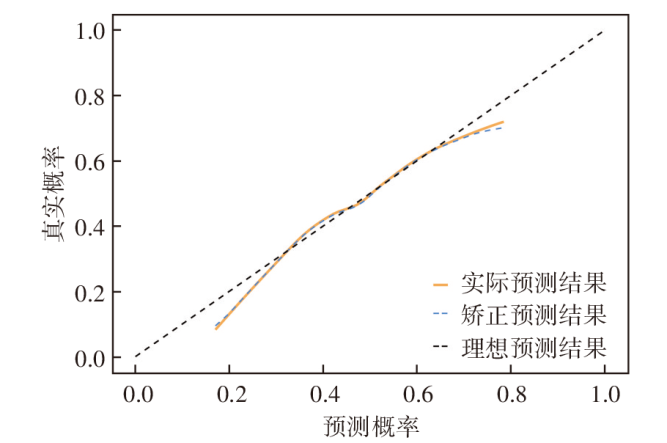
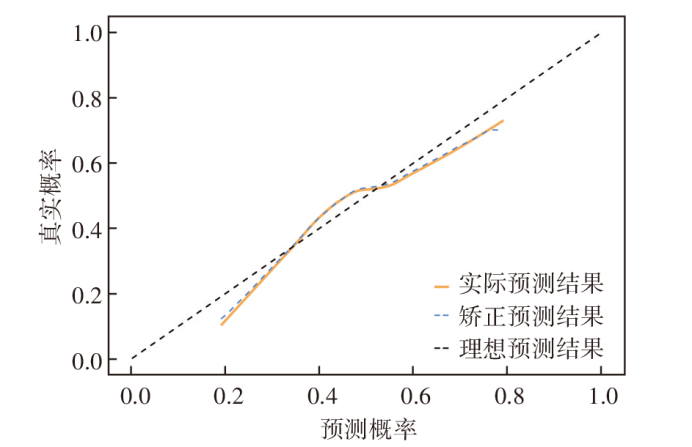
| [1] |
Jing M, Lin C, Zhu W, et al. Cost-effectiveness analysis of GnRH-agonist long-protocol and GnRH-antagonist protocol for in vitro fertilization[J]. Sci Rep, 2020, 10(1):8732. doi: 10.1038/s41598-020-65558-0.
pmid: 32457475 |
| [2] | Zhang LJ, Liu D, Xu LQ, et al. Impact of Luteinizing Hormone on IVF/ICSI Assisted Reproduction on the Initiation Day of Gonadotropin-releasing Hormone Antagonist Protocol[J]. Endocr Metab Immune Disord Drug Targets, 2025, 25(5):400-410. doi: 10.2174/0118715303281640240722070348. |
| [3] | 孙丽, 李欣欣, 李跃, 等. 拮抗剂方案新鲜胚胎移植和冻融胚胎移植临床结局比较[J]. 中国临床解剖学杂志, 2024, 42(2):181-185. doi: 10.13418/j.issn.1001-165x.2024.2.11. |
| [4] | Xu B, Geerts D, Yuan J, et al. A modified flexible GnRH antagonist protocol using antagonist early cessation and a gonadotropin step-down approach improves live birth rates in fresh cycles: a randomized controlled trial[J]. Hum Reprod, 2024, 39(9):1969-1978. doi: 10.1093/humrep/deae145. |
| [5] |
Roque M, Valle M, Sampaio M, et al. Obstetric outcomes after fresh versus frozen-thawed embryo transfers: A systematic review and meta-analysis[J]. JBRA Assist Reprod, 2018, 22(3):253-260. doi: 10.5935/1518-0557.20180049.
pmid: 29782139 |
| [6] | Qu P, Chen L, Zhao D, et al. Nomogram for the cumulative live birth in women undergoing the first IVF cycle: Base on 26, 689 patients in China[J]. Front Endocrinol (Lausanne), 2022, 13:900829. doi: 10.3389/fendo.2022.900829. |
| [7] | Ezoe K, Miki T, Akaike H, et al. Maternal age affects pronuclear and chromatin dynamics, morula compaction and cell polarity, and blastulation of human embryos[J]. Hum Reprod, 2023, 38(3):387-399. doi: 10.1093/humrep/dead001. |
| [8] | Xiong F, Sun Q, Wang S, et al. A nomogram to assist blastocyst selection in vitrified-warmed embryo transfer cycles[J]. J Obstet Gynaecol Res, 2022, 48(7):1816-1828. doi: 10.1111/jog.15138. |
| [9] | Mac Dougall K, Beyene Y, Nachtigall RD. Age shock: misperceptions of the impact of age on fertility before and after IVF in women who conceived after age 40[J]. Hum Reprod, 2013, 28(2):350-356. doi: 10.1093/humrep/des409. |
| [10] | Ince O, Yilmaz B. The impact of the trigger day progesterone, luteinizing hormone and their interaction on live birth rates in GnRH antagonist cycles[J]. J Obstet Gynaecol Res, 2025, 51(1):e16181. doi: 10.1111/jog.16181. |
| [11] |
Jreij C, Halimeh R, Fadel D, et al. The Effect of Progesterone Elevation on the Day of Trigger Administration: A Review of the Literature[J]. J Reprod Infertil, 2024, 25(2):102-109. doi: 10.18502/jri.v25i2.16005.
pmid: 39157800 |
| [12] | Kalakota NR, George LC, Morelli SS, et al. Towards an Improved Understanding of the Effects of Elevated Progesterone Levels on Human Endometrial Receptivity and Oocyte/Embryo Quality during Assisted Reproductive Technologies[J]. Cells, 2022, 11(9):1405. doi: 10.3390/cells11091405. |
| [13] | Wang L, Qiu P, Jiang L, et al. Competent blastocyst and receptivity endometrium improved clinical pregnancy in fresh embryo transfer cycles: a retrospective cohort study[J]. BMC Pregnancy Childbirth, 2024, 24(1):258. doi: 10.1186/s12884-024-06399-x. |
| [14] | Kamath MS, Mascarenhas M, Kirubakaran R, et al. Number of embryos for transfer following in vitro fertilisation or intra-cytoplasmic sperm injection[J]. Cochrane Database Syst Rev, 2020, 8:CD003416. doi: 10.1002/14651858.CD003416.pub5. |
| [1] | LIU Min-rui, LIU Min, ZHANG Fu-qing. Impact of Embryo Type on Pregnancy and Neonatal Outcomes in the First Frozen-Thawed Embryo Transfer Cycle of Patients with Polycystic Ovary Syndrome [J]. Journal of International Reproductive Health/Family Planning, 2026, 45(5): 362-367. |
| [2] | YU Zhao-juan, GUO Pei-pei. Reassessment of Clinical Value on Sequential Embryo Transfer in Recurrent Implantation Failure [J]. Journal of International Reproductive Health/Family Planning, 2026, 45(5): 401-406. |
| [3] | HE Fang-yu, ZHANG Run-yao, GAO Ming-xia. Impact of Female Genital Tuberculosis on Fertility and Its Prevention and Management in Women Undergoing In Vitro Fertilization and Embryo Transfer [J]. Journal of International Reproductive Health/Family Planning, 2026, 45(5): 407-411. |
| [4] | CHEN Yan, WANG Shan-lin, MA Zhen-hua, GAO Hui, ZHOU Rong, DING Ming-ming, XIANG Min. Analysis of Influencing Factors of Adverse Psychological State of Primipara in Late Pregnancy and Its Impact on Maternal and Infant Outcome [J]. Journal of International Reproductive Health/Family Planning, 2026, 45(4): 270-275. |
| [5] | ZHANG Yu, DING Xue-song, GUO Ying-ying, XUE Wei, WANG Yang, SUN Ai-jun. Advances in the Relationship between Low Energy Availability and Functional Hypothalamic Amenorrhea [J]. Journal of International Reproductive Health/Family Planning, 2026, 45(4): 336-341. |
| [6] | DU Chao, CHENG Xu, YU Xin-tong, SUN Kai-xuan, ZHANG Qian, ZHOU Jing. Research on Dyadic Coping and Anxiety/Depression in Separated Couples with Infertility Undergoing IVF-ET Based on Actor-Partner Interdependence Model [J]. Journal of International Reproductive Health/Family Planning, 2026, 45(3): 190-195. |
| [7] | ZHU Yan-jun, WEN Yi, GONG Fei. Transabdominal Ultrasound-Guided Oocyte Retrieval in Ovulation Induction Cycle: A Report of Two Cases [J]. Journal of International Reproductive Health/Family Planning, 2026, 45(3): 218-223. |
| [8] | WANG Wei, DAI Bai, SHA Ri-na, TUO Ya. Research Progress on the Mechanism of KIF18B in Female Reproductive Function [J]. Journal of International Reproductive Health/Family Planning, 2026, 45(3): 230-235. |
| [9] | KUANG Qian-qian, ZHAO Xian, ZHANG Ning, XI Jin, YUAN Rong-li, LIU Qi, WANG Meng-jing. Research Progress on the Effect and Mechanism of Acupuncture Intervention at Different Stages of IVF-ET [J]. Journal of International Reproductive Health/Family Planning, 2026, 45(3): 247-252. |
| [10] | KONG Jing, YU Lan, ZHANG Cui-lian. The Impact of Vitamin D on Assisted Reproductive Technology Outcomes in Women with Polycystic Ovary Syndrome [J]. Journal of International Reproductive Health/Family Planning, 2026, 45(2): 154-159. |
| [11] | XU Dan, ZHOU Qiao, JI Hui. Effects of Endometrial Preparation Protocols on the Live Birth Outcome after Endometrial Polypectomy [J]. Journal of International Reproductive Health/Family Planning, 2026, 45(1): 1-5. |
| [12] | CAI Li-yi, JIANG Yu-ying, ZHUANG Qian-mei, CHEN Xin-ying. The Genetic Etiology Analysis of A t(8;13) Balanced Chromosomal Translocation Family [J]. Journal of International Reproductive Health/Family Planning, 2026, 45(1): 18-22. |
| [13] | HU Xiao-hong, LING Fei-fei, BAI Yao-jun, LI Hong-li, LIU Chang. A Case of Cystic Adenomyosis [J]. Journal of International Reproductive Health/Family Planning, 2026, 45(1): 28-31. |
| [14] | CHEN Jia-lang, ZHANG Yun-shan, WANG Guang-teng, PANG Ze-hui. The Impact of Sperm DNA Fragmentation on Intrauterine Insemination Outcomes and Intervention Strategies [J]. Journal of International Reproductive Health/Family Planning, 2026, 45(1): 40-44. |
| [15] | HUANG Ru, JIN Meng-han, ZHONG Yu-nong, WANG Ke-han, MENG Qing-xia. Research Progress on DNA Methylation of Gametes, Embryos and Offspring from Assisted Reproductive Technology [J]. Journal of International Reproductive Health/Family Planning, 2026, 45(1): 45-48. |
| Viewed | ||||||
|
Full text |
|
|||||
|
Abstract |
|
|||||
